
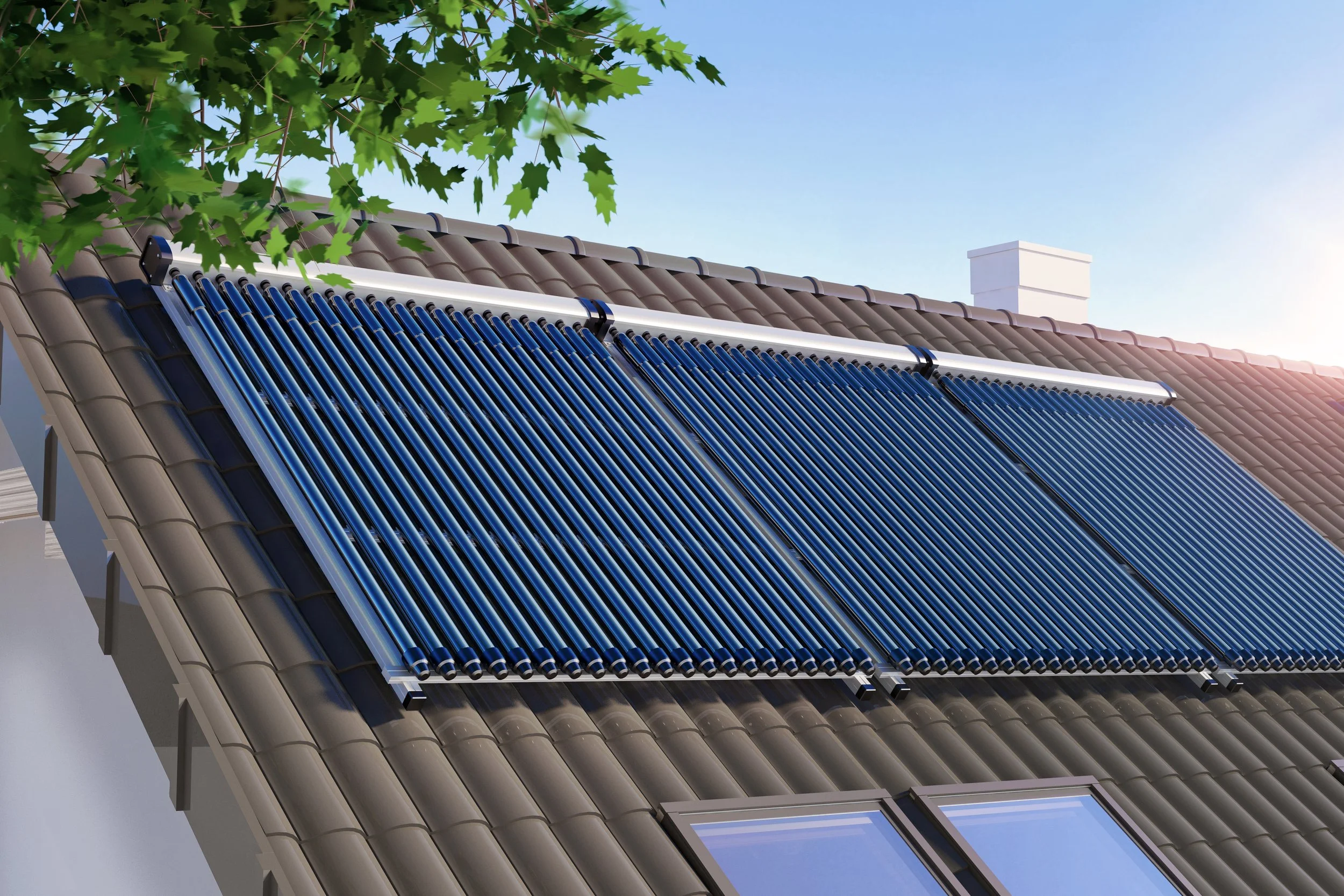
Solar Thermal
Professional solar thermal systems tailored to your home and lifestyle.
What is Solar Thermal?
Solar thermal energy captures sunlight and converts it into heat. This heat is transferred into water or another fluid, which can then be stored and used for hot water, heating, or industrial applications.
How it Works
Solar collectors absorb sunlight.
The heat is transferred to a circulating fluid.
The heated fluid is stored in an insulated tank.
The energy is used for hot water, heating, or cooling.
Harness the power of the sun to heat your water, your home, and even your business. With solar thermal technology, you can enjoy renewable energy that reduces your bills, lowers your carbon footprint, and provides long-lasting performance.
Solar thermal is not only a smart investment for reducing energy costs, but also a powerful way to cut carbon emissions and support a sustainable future. By replacing fossil fuel–based heating with clean, renewable solar energy, households and businesses can significantly lower their environmental impact while enjoying reliable hot water and heating all year round. With proven technology, long system lifespans, and minimal maintenance, solar thermal offers both immediate savings and long-term environmental benefits, making it one of the most effective renewable energy solutions available today.


FAQs
-
Solar thermal energy uses sunlight to produce heat, usually for water heating, space heating, or industrial applications. It’s different from solar PV, which produces electricity.
-
Collectors absorb sunlight and transfer the heat to a circulating fluid. That fluid stores heat in a tank and supplies it to your home or business for hot water or heating.
-
Yes. Solar thermal systems are designed to work in all climates. On cloudy days, they may produce less heat, but the system can be combined with a backup heater to ensure hot water year-round.
-
Solar PV converts sunlight into electricity.
Solar Thermal converts sunlight into heat.
They serve different purposes but can also complement each other.
-
Savings depend on your energy usage, system size, and local sunlight. On average, households can save 40–70% on water heating costs, with payback periods of 5–10 years.
-
With proper maintenance, solar thermal systems typically last 20–25 years.
-
An annual check is usually enough. Collectors are durable, and most systems are low-maintenance.
-
Yes, but it depends on the design. Solar thermal can provide hot water, space heating (radiators, underfloor), and even pool heating. It’s often combined with other heating sources for reliability.
-
Yes, most systems integrate easily with gas, oil, or electric boilers.
Ready to Go Solar?
Contact us today for a free consultation and quote. Let us help you switch to a cleaner, more cost-effective way to heat your water.
Go green
•
Eco-friendly
•
Clean energy
•
Lower costs
•
Zero emissions
•
Low maintenance
•
Sustainable
•
Go green • Eco-friendly • Clean energy • Lower costs • Zero emissions • Low maintenance • Sustainable •